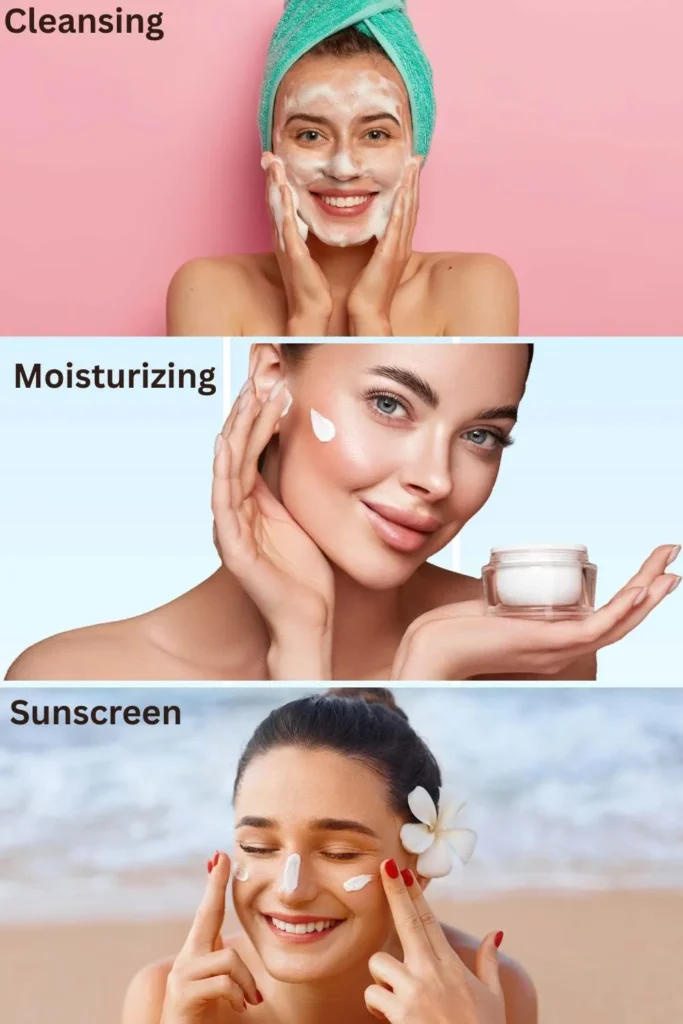
If you ever wandered through the beauty aisle and wondered, what are peptides in skincare, you’re not alone. The term pops up everywhere—from serums and moisturizers to under-eye creams and anti-aging sets. So let’s break it down in the simplest way possible: what are peptides in skincare, and why does everyone swear by them?
Peptides may be microscopic, but they’re mighty. They act like mini messengers that tell your skin to repair, hydrate, and rebuild. As you age, your skin slows down these signals. Peptide-rich products basically deliver those messages for you—helping your skin stay firm, glowing, and youthful.
Understanding Peptides: The Building Blocks Behind Healthy, Firm Skin
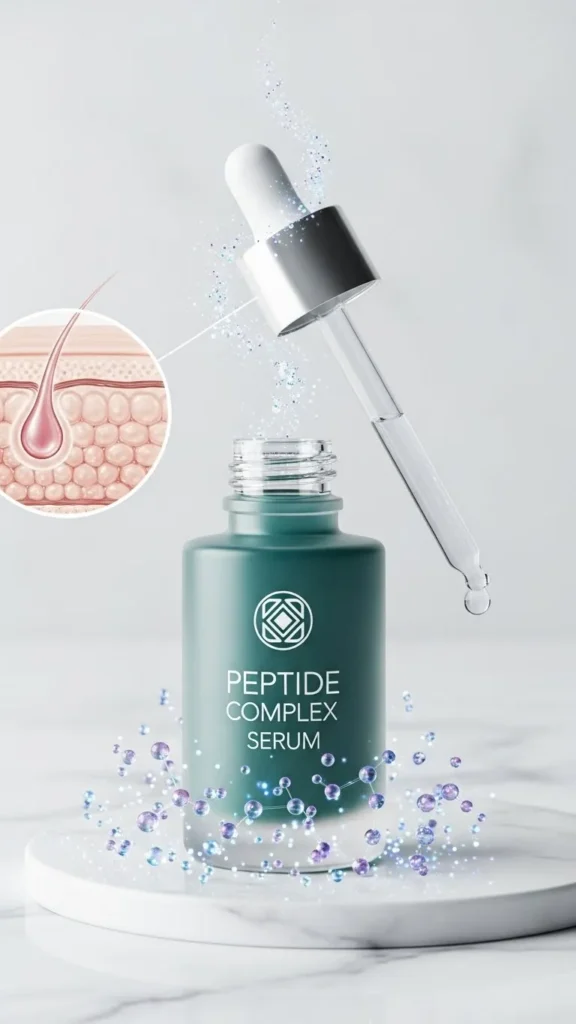
Peptides are short chains of amino acids that help create proteins like collagen, elastin, and keratin. Think of them like the raw materials your skin needs to stay strong. When your skin gets damaged or simply ages, these building blocks slowly decline. That’s where bold variants like “peptides for skin,” “peptide skincare ingredients,” and “collagen-boosting peptides” come into action.
When applied in a serum or cream, these peptides reach deeper skin layers and signal your cells to produce fresh collagen. And that’s exactly why they’re so popular—they don’t just hydrate your skin; they literally tell it how to act younger.
Types of Peptides and What They Do
There are several different types of peptides. Choosing the right type of peptide can help you get the right type of results faster and will allow you to be more specific as to which areas of your body should be treated with the peptides.
1. Signal Peptides
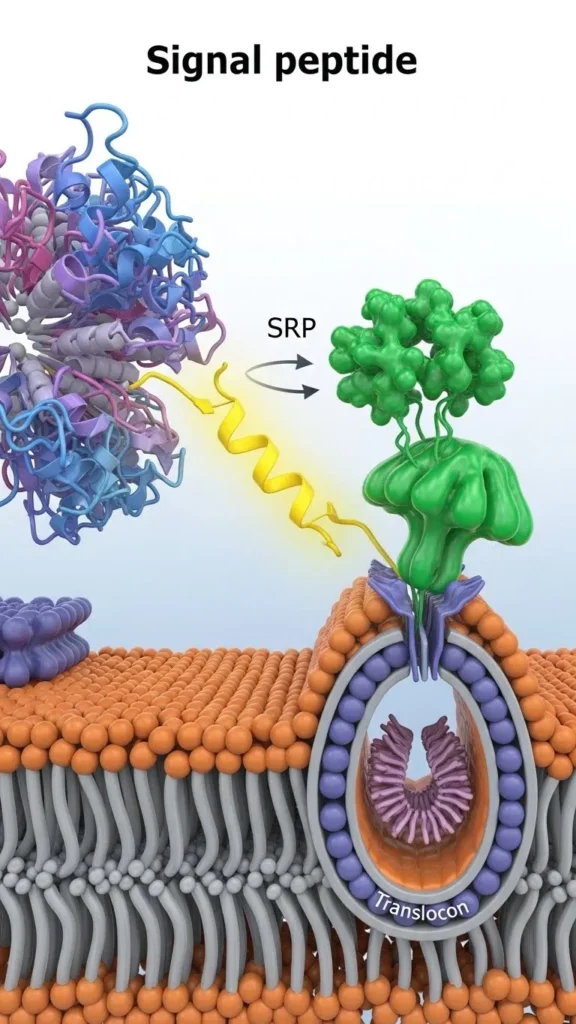
Signal peptides are responsible for stimulating collagen production for increased skin firmness. Signal peptides are frequently referred to as “anti-aging peptides” and/or “skin-repair peptides.”
2. Carrier Peptides
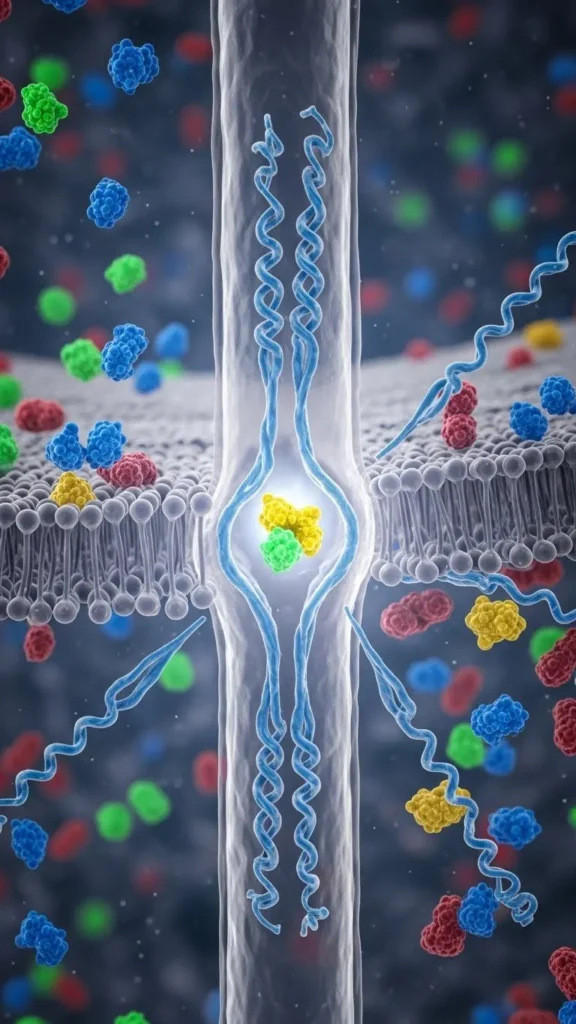
Carrier peptides transfer essential minerals (i.e. copper) to the skin and assist in the healing and renewal process of skin cells. Copper peptides for skin rejuvenation are a good representation of a carrier peptide.
3. Enzyme Inhibitor Peptides
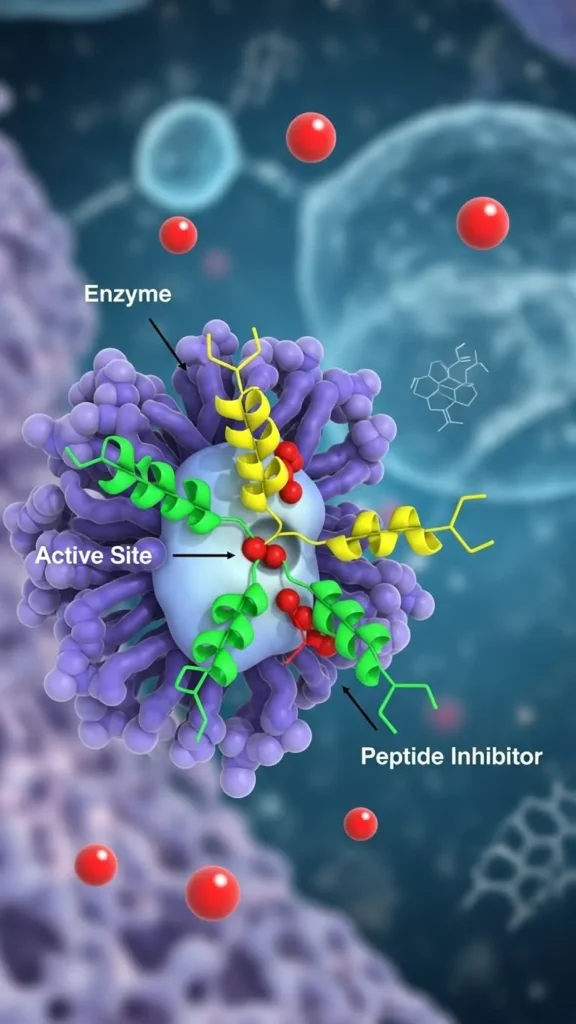
Enzyme inhibitor peptides work to prevent collagen from breaking down. Enzyme inhibitor peptides are sometimes referred to as “elasticity-protecting peptides.”
4. Neurotransmitter Peptides

Neurotransmitter peptides have been labelled “topical Botox peptides” because of their ability to soften fine lines and expression wrinkles on the skin.
The Biggest Benefits of Peptides for Skin
Peptide multitasking is outstanding: from reducing signs of aging to treating dryness, improving barrier function, reducing inflammation, and increasing hydration, there is no reason not to use peptides!
✔ Naturally boosts collagen
Peptides are classified as collagen-stimulating peptides. This means they stimulate your skin’s production of collagen.
✔ Stronger skin barrier
The skin is the largest organ in the body and protects us from all types of environmental aggressors, including pollutants. Barrier-repair peptides keep your skin healthy and looking young.
✔ Fine line and wrinkle reducer
Peptides stimulate your skin to create new cells and promote renewal, which helps reduce the appearance of fine lines and wrinkles.
✔ Deeply hydrates
Some peptide creams contain moisture-locking peptides that create a plump, silky finish.
✔ Repairs damaged skin
Copper peptides are widely recognized as skin-repairing peptides due to their anti-inflammatory properties and ability to stimulate collagen synthesis.
✔ Safe for sensitive skin
Compared to retinol, peptides are more likely to cause skin sensitivities and, therefore, are ideal for anyone with sensitive/reactive skin types.
Do Peptides Really Work? Science Says Yes
Peptides have been researched through dermatological studies and due to their size, they will be able to penetrate into deeper layers of the skin in comparison with large-sized proteins such as collagen. That’s why products with “bioactive peptides,” “penetrating peptides,” and “skin-renewing peptide blends” can create real, visible improvements when used consistently over weeks.Peptides will not produce an overnight miraculous appearance but will deliver long lasting results in combination with moisturisers and hydration serums, specifically.
How to Choose the Best Peptide Products
Not all peptide products are created equal. Here’s how to shop smart:
✔ Choose Serums Over Creams
Serums contain higher concentrations of “active peptides.”
✔ Look for Multi-Peptide Formulas
Products with “peptide complexes,” “multi-chain peptides,” or “tripeptides + hexapeptides blends” work even faster.
✔ Combine Peptides With Hydration
They pair beautifully with hyaluronic acid, ceramides, and squalane.
✔ Avoid Harsh Exfoliants With Peptides
Overuse of acids can deactivate delicate peptide structures.
✔ Pick Smart Packaging
Air-tight or pump bottles protect peptide integrity and prevent oxidation.
How to Use Peptides in Your Daily Routine
Want to boost results? Here’s a simple morning and night routine:
Morning Routine
- Cleanser
- Peptide serum
- Moisturizer
- Sunscreen
Night Routine
- Cleanser
- Toner
- Peptide cream or serum
- Night moisturizer
You can safely use “daily peptide treatments” because they’re gentle and non-irritating.
Peptides vs. Retinol — Which Should You Use?
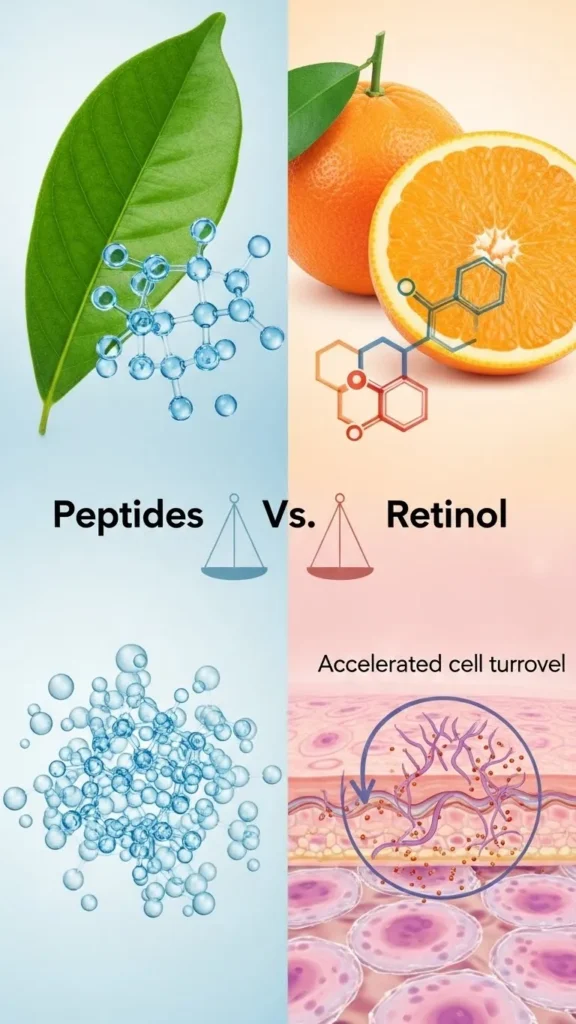
People commonly wonder if peptides and retinol are interchangeable; in reality they have different effects on our skin’s texture/health.
For instance
- Retinol increases your skin’s rate of renewal.
- Peptides increase your skin’s production of collagen, support wound healing, and provide hydration.
Together, they can create amazing results! A good way to utilize both products together would be to use retinol at night, peptide serum in the morning, or if you have sensitive skin, consider alternating these two substances every other evening.
Who Should Use Peptides?
Peptides are suitable for:
✔ People in their late 20s and above
✔ Those with dull or dehydrated skin
✔ Anyone wanting anti-aging benefits without irritation
✔ Brides preparing for flawless skin
✔ Those with barrier damage
✔ Sensitive or acne-prone skin
If youthful, firm, glowing skin is your goal, peptide-rich skincare is a smart investment.
Are Peptides Safe?
Yes—peptides are naturally found in your body, making them extremely safe. They’re one of the few active ingredients that rarely cause redness, peeling, or dryness. Even people with eczema often tolerate “soothing peptide creams.”
Conclusion
Understanding what are peptides in skincare helps you see why these tiny molecules are considered the future of anti-aging. Their ability to repair, firm, hydrate, and rebuild collagen makes them one of the most powerful and reliable ingredients you can add to your routine. Whether you’re targeting wrinkles, sagging, or dullness, peptide-based products offer gentle yet effective results that keep your skin looking radiant, youthful, and strong.